In This Article
Pruning is one of the most commonly misunderstood aspects of tree care. Homeowners often see it as a cosmetic service — a way to tidy up a tree or keep it from looking overgrown. In reality, proper pruning is one of the most impactful things you can do for a tree’s long-term health, safety, and structural integrity.
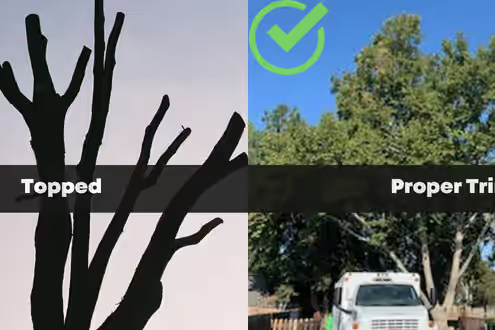
The keyword is proper. Improper pruning — over-pruning, heading cuts, topping, or lion’s-tailing — can cause more harm than no pruning at all. Understanding what good pruning accomplishes helps you recognize when it’s needed and what to expect from a qualified arborist.
Safety: Removing Hazardous Branches
The most immediate benefit of pruning is hazard reduction. Dead branches are the most obvious target — dead wood loses its flexibility and becomes brittle, and can fail without warning, especially during wind events or under ice loading. A dead branch over a roof, vehicle, or play area is a liability.
Beyond dead wood, structural pruning addresses:
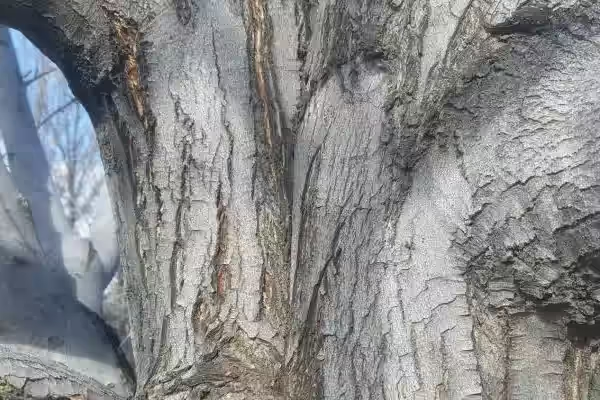
- Co-dominant stems with included bark, which are prone to splitting
- Branches growing toward structures that will eventually contact or damage roofs, gutters, or siding
- Low-hanging branches that create clearance issues for vehicles, pedestrians, or mowing equipment
- Water sprouts and suckers that create dense, weak growth clusters in the crown
Proper pruning removes these hazards before they become incidents, and does so in a way that preserves the tree’s structural integrity rather than creating new problems.
Tree Health: Removing Dead and Diseased Wood
Dead and diseased branches are entry points for wood-decay fungi and pathogenic bacteria. Removing them promptly — particularly in species susceptible to specific diseases — limits the spread of infection into healthy tissue.
In the Treasure Valley, fire blight (a bacterial disease affecting apple, crabapple, and mountain ash) is a good example. Infected branches should be removed promptly, cutting well below the visible infection into healthy wood, and the pruning tools disinfected between cuts. Proper pruning technique makes the difference between containing an outbreak and watching it spread through the entire crown.
Crown thinning — selectively removing branches to increase air circulation through the crown — also reduces the humid microclimate that many foliar fungal diseases require to establish. Well-pruned crowns dry faster after rain and are simply less hospitable to pathogens.
Structure: Improving Long-Term Form
Structural pruning is the most valuable service for young trees and is often underutilized. The goal is to establish a single dominant leader, appropriate branch spacing, and branches with wide attachment angles — all before the tree reaches a size where correction becomes expensive or impossible.
A tree that receives structural pruning at ages 3, 7, and 12 will almost never develop the serious structural defects (codominant stems, included bark, heavily weighted scaffold branches) that cause problems — and require expensive intervention — decades later. The investment is small; the payoff is enormous.
For mature trees, structural pruning focuses on maintaining the existing form rather than correcting it. End-weight reduction on long, heavy branches reduces the leverage stress at attachment points. Crown-raising removes low branches that have fulfilled their structural purpose.
Aesthetics: Improving Appearance and Light
Pruning can dramatically improve the appearance of a tree by:
- Revealing the natural branching architecture
- Opening up views that dense crown growth was blocking
- Balancing an asymmetric crown
- Removing crossing, rubbing, or crowded branches that clutter the silhouette
Beyond appearance, crown thinning allows more light to reach the ground beneath the tree — benefiting lawn, garden beds, or other plantings in the tree’s shade. In Treasure Valley yards where a single large tree can shade a significant portion of the property, thoughtful thinning can meaningfully improve the productivity of sun-dependent plants beneath.
When Is the Best Time to Prune?
The answer depends on the species and the goal.
Late winter (February–March) is generally the best time for most species in the Treasure Valley. Pruning just before bud break allows wounds to begin closing at the same time the tree’s growth energy peaks. Pests and pathogens are less active in winter, and without leaves it’s easier to see the branch structure clearly.
Summer pruning is appropriate for corrective work and for species that benefit from it. Oak, for example, should be pruned when beetles transmitting oak wilt are least active (mid-summer or winter). Elms similarly should avoid spring pruning to reduce Dutch elm disease risk.
Avoid heavy pruning in fall — wounds close slowly as the tree enters dormancy, and late-season pruning can stimulate late growth that hasn’t time to harden off before frost.
For most homeowners, having a qualified arborist evaluate your trees and recommend a pruning schedule — rather than pruning on a fixed annual calendar regardless of need — produces the best outcomes for tree health and budget.